Understanding Obsessive-Compulsive Disorder (OCD): Everything You Need to Know.
Disclaimer: This article is for educational purposes only and does not replace expert medical or mental health advice. OCD requires a comprehensive psychiatric evaluation by a qualified clinician. So, always refer to a licensed mental health specialist for diagnosis and treatment.
Obsessive-compulsive disorder (OCD) is a chronic mental health condition characterized by recurring, intrusive thoughts (obsessions) followed by repetitive mental or behavioral actions (compulsions) that significantly interfere with daily life and functioning. While many people experience fleeting unwanted thoughts or habits, those with OCD experience these symptoms to an extent that is fear-inducing, time-consuming, and distressing.
What Are Obsessions and Compulsions?
Obsessions and compulsions define obsessive-compulsive disorder, commonly known as OCD.
Obsessions are unwanted, persistent thoughts, urges, or images that repeatedly enter your mind and lead to significant anxiety and discomfort. Common obsessions involve fears of contamination, need for perfection, fear of sinning or offending God, fear of hurting oneself or others, and taboo thoughts. Typically, these thoughts are ego-dystonic - meaning they go against a person’s principles and desires.
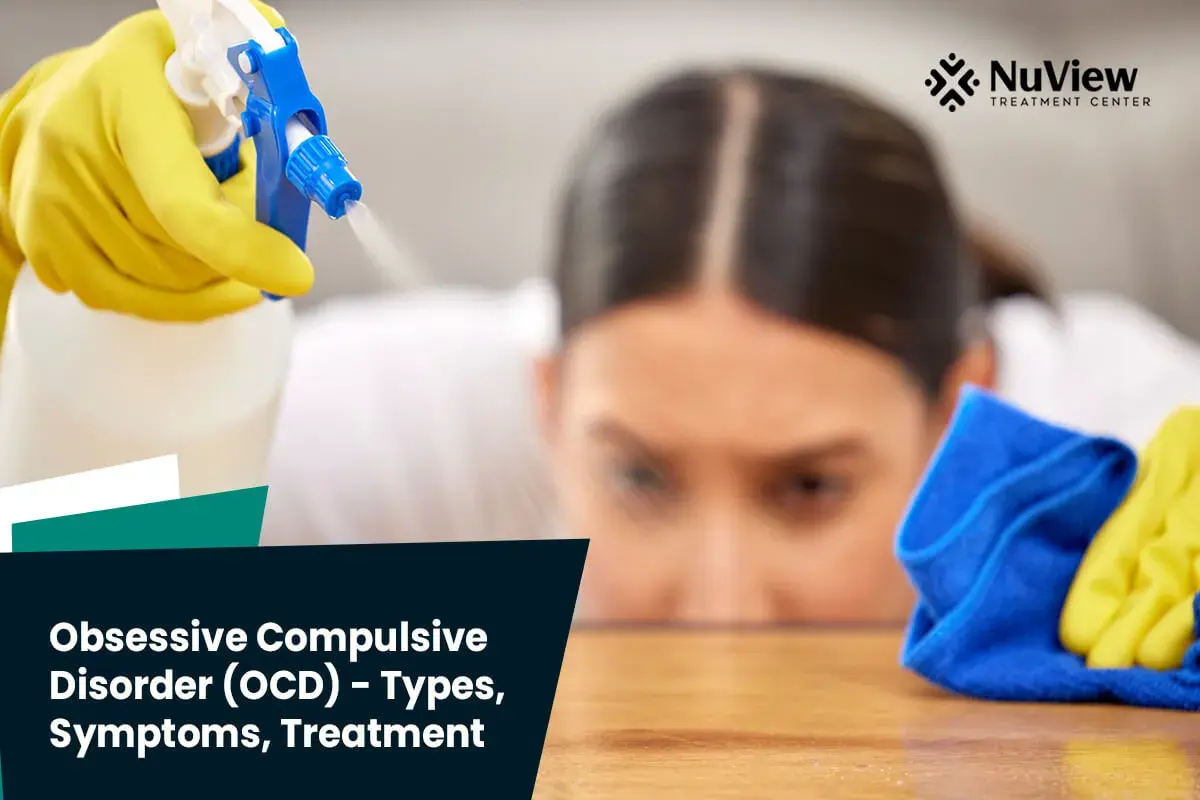
Compulsions are mental actions or repetitive behaviors that you feel compelled to perform in response to your obsessions. These acts serve to reduce anxiety, but they only provide temporary relief and may even reinforce the cycle of OCD over time. Common compulsive behaviors involve excessive handwashing, repeated checking, arranging and rearranging, praying, or seeking constant validation.
While many can understand that their thoughts or behaviors might be problematic, the International OCD Foundation says that nearly 2/3rds cannot identify OCD properly.
How Can OCD Impact Daily Life?
OCD can be deeply disruptive in different ways, such as:
- Self-care and hygiene
- Education or job performance
- Personal relationships
- Social activities
- Mental well-being.
In severe cases, a person may spend hours each day battling intrusive thoughts or performing compulsions, making every day feel overwhelming.
Get Started With Nuview Treatment Center
Our dedicated professional staff is here to guide you or your loved one on the journey to lasting recovery, offering support every step of the way.

What Are Risk Factors for OCD?
Peer-reviewed articles published in the National Library of Medicine (NLM) report that OCD impacts 1% to 3% worldwide. While OCD can impact anyone, experts suggest that certain risk factors can increase the risk:
- Genetic Predisposition: Family studies indicate that a family history of OCD increases the likelihood of developing OCD by 4 times. However, genetic risk does not imply causation.
- Brain Chemistry: Genetic studies have indicated that OCD may be linked with imbalances in dopamine, serotonin, and glutamate levels. The SLC1A1 gene, which plays a role in transporting glutamate in the brain, has been identified as a potential factor.
- Gender: Clinical gender difference reviews show that men tend to report earlier onset of OCD symptoms, while women report a later onset.
- Environment: Environmental factors like society, stress, and trauma have been linked with OCD. One systematic review of etiology and symptom severity has indicated that 70% were able to link it with a traumatic life event. On the other hand, 30% have linked trauma to worsening symptoms.
- Underlying Mental Health Conditions: Systematic reviews and meta-analyses show that some mental health conditions co-occur with OCD, like anxiety disorders, major depressive disorder, bipolar disorder, personality disorders, and other psychiatric conditions.
How Is OCD Diagnosed?
OCD can only be diagnosed by a qualified mental health practitioner, like a clinician, psychologist, or psychiatrist.
Diagnosis is based on the criteria mentioned in the Diagnostic and Statistical Manual of Mental Disorders (DSM-5-TR), clinical interviews, family history, and even physical examinations to rule out other conditions.
Typically, the healthcare provider will look for:
- Presence of obsessions and/or compulsions
- Time consumed by obsessions and compulsions
- Level of discomfort or impairment in daily functioning.
While there is no single test, diagnosis relies on diagnostic criteria, structured interviews, clinical observation, and standardized rating scales, like the Yale-Brown Obsessive-Compulsive Scale (Y-BOCS) or the Obsessive-Compulsive Inventory-Revised (OCI-R; self-rating).
A clinician will also rule out other conditions that can mimic OCD symptoms, such as generalized anxiety disorder, obsessive-compulsive personality disorder (OCPD). tic disorders, or psychotic disorders.
OCD can manifest differently in different persons. This is why if you suspect corresponding symptoms in yourself or a loved one, reaching out to a qualified and licensed mental health specialist is crucial.
How Is OCD Treated?
The American Psychiatric Association (APA) says that OCD can be treated with psychotherapy, medication, and neuromodulation treatment options.
Psychotherapy
Clinical insight and reviews have indicated that exposure and response prevention (ERP) therapy is among the best evidence-based treatments for OCD. ERP slowly exposes you to your subject or object of obsessive thoughts under safe conditions so that you can learn alternative, albeit healthier ways to respond to them.
Cognitive behavioral therapy is also used to effectively treat this condition.
Medication
Clinical reviews have shown that SSRIs have been effective in treating OCD, as they are effective in treating other mental health disorders, like major depressive disorder or anxiety disorders. However, OCD may require higher doses.
A tricyclic antidepressant called clomipramine is also used to treat this condition, but is not as commonly prescribed.
Medication selection, dosage, and duration are always determined and monitored by a licensed prescriber, given potential side effects and unique risk factors.
Neuromodulation Treatment
Some studies have suggested that transcranial magnetic stimulation (TMS) and deep brain stimulation (DBS) can be effective in treating OCD if other treatments have not been effective. However, they are not commonly used.
Get Started With Nuview Treatment Center


Could OCD be affecting your daily life?
This quick 2-minute quiz can help you understand whether intrusive thoughts, urges, or rituals may be signs of OCD and whether outpatient treatment could help.
Private. Judgment-free. Designed to help you find the right level of care.Is Treatment for OCD Effective?
Yes, treatment for OCD is highly effective. Long-term outcomes have indicated that 32% to 74% of those who seek treatment experience clinically significant improvements over time.
Peer-reviewed studies published in the NLM report that 50% to 60% of those who finish ERP therapy show clinically significant improvements in symptoms, while higher doses of SSRIs can also lead to effective outcomes.
Integrated, personalized care for OCD is highly recommended. When combined with the sense of family and community, it leads to better and sustained outcomes.
Take Control of Your OCD with NuView - Beginning Today!
If you or a loved one is struggling with OCD, we understand how challenging it can be. NuView Treatment Center provides a full continuum of outpatient, personalized care that is tailored to your symptoms, needs, and goals.
Our licensed and experienced mental health specialists provide a safe, confidential environment that serves as a strong foundation for your healing and well-being.
Please contact us at (323) 307-7997 to begin healing today!
Frequently Asked Questions About Obsessive-Compulsive Disorder (OCD)
Can OCD symptoms change or shift themes over time?
Yes, OCD can change or shift themes, but the underlying disorder remains the same.
Can OCD exist without obsessive or compulsive behaviors?
OCD always involves obsessions and compulsions. In some subtypes, like “Pure O”, compulsions are primarily mental (like rumination) rather than visible behaviors.
Does stress cause OCD?
Stress does not directly cause OCD, but can significantly trigger symptom onset or worsen existing symptoms.
Is reassurance from family and loved ones helpful or harmful in OCD?
Constant reassurance can unintentionally reinforce compulsions and worsen OCD symptoms over time.
Can untreated OCD affect physical and mental health in the long run?
Yes, chronic OCD can impact physical and mental health through stress, sleeplessness, lack of hygiene, relationship and career disruptions, and so on.
- What Are Obsessions and Compulsions?
- How Can OCD Impact Daily Life?
- What Are Risk Factors for OCD?
- How Is OCD Diagnosed?
- How Is OCD Treated?
- Is Treatment for OCD Effective?
- Take Control of Your OCD with NuView - Beginning Today!
- Frequently Asked Questions About Obsessive-Compulsive Disorder (OCD)
- What Are Obsessions and Compulsions?
- How Can OCD Impact Daily Life?
- What Are Risk Factors for OCD?
- How Is OCD Diagnosed?
- How Is OCD Treated?
- Is Treatment for OCD Effective?
- Take Control of Your OCD with NuView - Beginning Today!
- Frequently Asked Questions About Obsessive-Compulsive Disorder (OCD)
Get Help Today!
- https://www.ncbi.nlm.nih.gov/books/NBK553162/
- https://iocdf.org/about-ocd/
- https://pmc.ncbi.nlm.nih.gov/articles/PMC3747631/
- https://pubmed.ncbi.nlm.nih.gov/31016410/
- https://www.sciencedirect.com/science/article/pii/S0010440X26000039?dgcid=rss_sd_all
- https://pmc.ncbi.nlm.nih.gov/articles/PMC8631971/
- https://www.psychiatry.org/psychiatrists/practice/dsm
- https://psycnet.apa.org/doiLanding?doi=10.1037%2Ft57982-000
- https://www.sciencedirect.com/science/article/abs/pii/S2211364920300683
- https://pmc.ncbi.nlm.nih.gov/articles/PMC6343408/
- https://iocdf.org/ocd-treatment-guide/medication/
- https://pubmed.ncbi.nlm.nih.gov/1883256/
- https://www.mdpi.com/2075-1729/13/7/1494
- https://pmc.ncbi.nlm.nih.gov/articles/PMC3932438/
- https://pmc.ncbi.nlm.nih.gov/articles/PMC6935308/
- https://pmc.ncbi.nlm.nih.gov/articles/PMC12155805/
- https://iocdf.org/ocd-finding-help/supportgroups/


Everyone is Welcome Here and We All Have Your Back
Your healing journey deserves a personalized approach. At NuView, we integrate expertise in behavioral therapy, mental health, and substance use treatment to create a customized recovery plan tailored to your unique needs.
Connect with our Admissions Specialists today.
Written By
Dr. Ryan Peterson, MD