Sexual OCD: Signs, Symptoms, and Recovery Options.
Disclaimer: This article is for educational purposes only and does not replace expert medical or mental health advice. Sexual OCD requires a comprehensive psychiatric evaluation by a qualified clinician. So, always refer to a licensed mental health specialist for diagnosis and treatment.
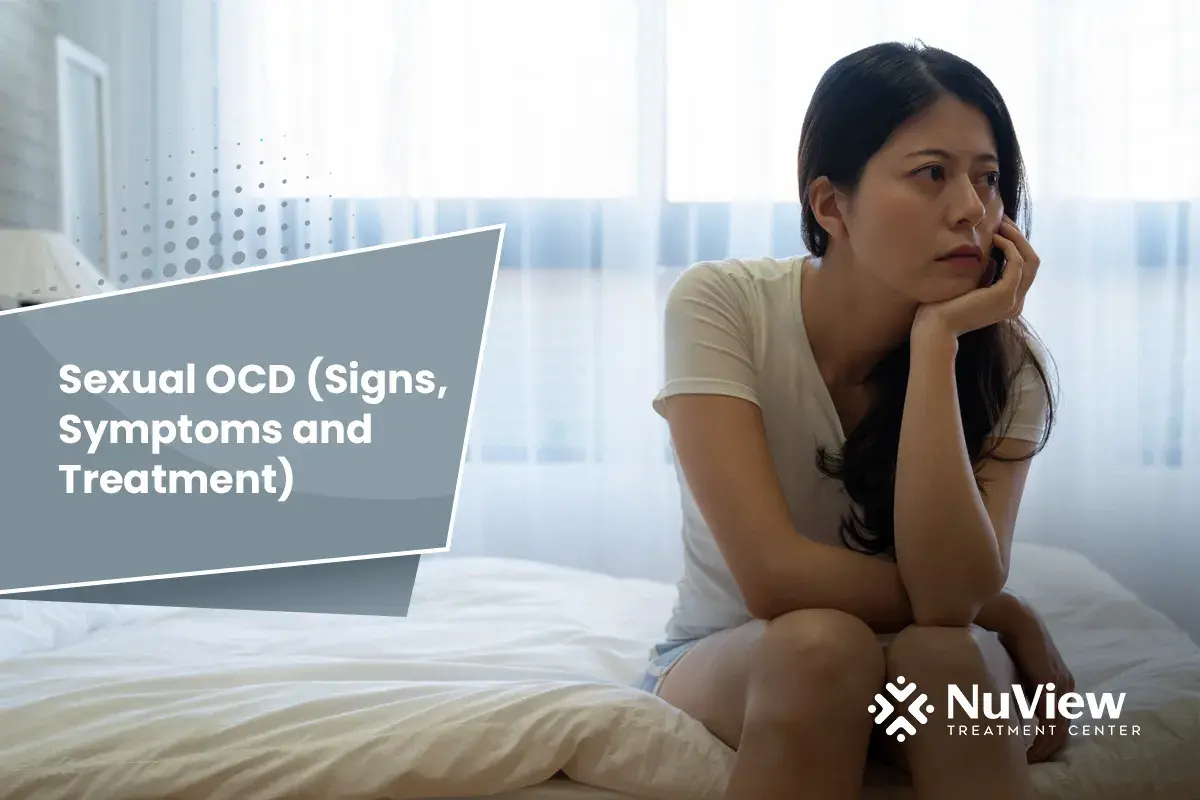
Sex is still a taboo in many societies, so even slightly intrusive sexual thoughts can seem too much or immoral. But when they become too intrusive that they disturb and disrupt your daily life and functioning, it can be an indication of sexual obsessive-compulsive disorder (OCD). Some estimates show that 24% with OCD this condition report intrusive sexual thoughts. In this article, we will explore what is sexual OCD, why it is so misunderstood, and how you can overcome this condition to lead a healthier, meaningful life.
What Is Sexual OCD?
Sexual OCD is a subtype of obsessive-compulsive disorder that is characterized by intrusive, repetitive sexual thoughts, feelings, and urges (obsessions), followed by repetitive physical and mental actions (compulsions) to relieve these obsessions. It is not a separate diagnosis but a symptom theme within OCD.
Sexual obsessions may involve taboo or socially unacceptable themes, such as fears of being attracted to inappropriate minors, engaging in morally unacceptable behavior, or questioning one’s sexual orientation. It is crucial to note that these thoughts are ego-dystonic - meaning they are inconsistent with the person’s principles and lead to significant distress.
Dr. Ryan Peterson, a highly experienced physician at the NuView Treatment Center, says, “Sex is a taboo subject, so sexual OCD can be easily misunderstood and dismissed as something immoral. But the reality is far from this. It is a mental health condition that needs to be treated for a healthy, fulfilling life.”
What Are the Signs and Symptoms of Sexual OCD?
The signs and symptoms of sexual OCD can be divided into sexual obsessions and sexual compulsions.
Unwanted sexual obsessions often involve thoughts, imagery, sensations, and urges related to sex. These obsessions lead to significant distress, anxiety, and shame.
Common compulsions involve physical and mental actions that are meant to neutralize these obsessions. Examples of physical actions involve watching porn, while mental actions involve praying, trying to pinpoint the origin of the obsessions, thinking something opposite to neutralize the sexual thoughts, and so on.
Get Started With Nuview Treatment Center
Our dedicated professional staff is here to guide you or your loved one on the journey to lasting recovery, offering support every step of the way.

What Are the Risk Factors for Sexual OCD?
There is no one definitive risk factor, but multiple risk factors that can play a role in the development of sexual OCD. Experts have suggested the following:
- Family studies have shown that a genetic predisposition for OCD can make it twice as likely to develop sexual OCD.
- Genetic studies have indicated that imbalances in neurotransmitter levels in the brain, such as dopamine, serotonin, and glutamate levels, can contribute to sexual OCD.
- A history of traum can be found among those with sexual OCD. One systematic review of etiology suggested that nearly 70% reported that their OCD was closely connected to a traumatic life event.
- Gender differences are considered to play a role, as men are more likely to develop sexual OCD than women.
- Environmental factors, like culture, can contribute to sexual OCD, especially in sexually repressed communities.
Is Sexual OCD the Most Misunderstood Mental Health Disorder?
While we cannot definitively say that sexual OCD is the most misunderstood mental health disorder, it is indeed one of the most misunderstood mental health conditions.
Sexual obsessions can involve taboo content, such as questions regarding questions about sexual urges and orientation, or fears of acting inappropriately. These are often misunderstood or misdiagnosed as paraphilias or true desires rather than anxiety-driven obsessions.
People with sexual OCD typically do not want or intend to act on these thoughts, and they struggle with intense shame, self-disgust, as well as the fear that the thoughts mean something about their character. Given this distress and the taboo, many avoid seeking the care they need and deserve, which contributes to under-reporting and a lack of treatment.
However, the truth is, in a safe, non-judgmental setting, proper diagnosis and OCD-focused therapies like cognitive behavioral therapy with exposure and response prevention can lead to meaningful improvements and healthier lives.
Get Started With Nuview Treatment Center
Can Sexual OCD Be Treated?
Yes, sexual OCD can be effectively treated with psychotherapy and medication.
The widely used therapies for sexual OCD are exposure and response prevention therapy (ERP) and cognitive behavioral therapy (CBT).
ERP slowly exposes you to your sexual OCD triggers under safe and controlled conditions, so that you can change your compulsive responses to them and employ productive coping techniques to engage with them instead.
CBT changes the underlying maladaptive patterns of sexual OCD and equips you with healthier skills and tools to deal with your challenges.
Medications for sexual OCD involve selective serotonin reuptake inhibitors (SSRIs) and a tricyclic antidepressant called clomipramine. These offer relief from the symptoms and heighten your sense of well-being, but are most effective when used in tandem with therapy. Medication decisions need to always be made in consultation with board-certified physicians or psychiatric practitioners, as dosages and side effects require careful monitoring.
Alternative treatments like transcranial magnetic stimulation and deep brain stimulation can also be used when other treatments have not been effective.
Is Treatment for Sexual OCD Effective?
Many with sexual OCD experience meaningful symptom reduction with evidence-based treatment. Outcomes vary depending on symptom severity, co-occurring conditions, early intervention, and treatment adherence.
Dr. Peterson says, “A significant majority of those who seek clinical treatment for OCD show significant improvement with time. Early diagnosis and intervention lead to the best outcomes. But if left untreated, the symptoms can worsen and contribute to other complications like anxiety, depression, social withdrawal, and even substance misuse.”
Seek the Care You Need and Deserve at NuView Today!
If you or a loved one is struggling with sexual OCD, we can understand how difficult and judged you may feel. At NuView, we create a safe and non-judgmental environment so that you can explore your obsessions and compulsions to heal, overcome, and lead a fulfilling life.
Please do not hesitate to contact us at (323) 307-7997 to connect with our experts today.
Frequently Asked Questions About Sexual OCD
Can sexual OCD even affect those who have never been sexually active?
Yes, sexual OCD can affect those who have never been sexually active, including children. It is driven by intrusive thoughts and anxiety, and not personal experience or sexual behavior.
Can sexual OCD change over time or shift to other themes?
Yes, sexual OCD themes can change over time.
Can stigma make sexual OCD symptoms worse?
Yes, the stigma and societal taboos around sex can intensify distress and delay seeking treatment for sexual OCD.
Does sexual OCD go away on its own?
No, if left untreated, sexual OCD can worsen and lead to other complications over time.
How to overcome sexual OCD?
Sexual OCD can be treated with therapy, medication, and alternative treatments.
- What Is Sexual OCD?
- What Are the Signs and Symptoms of Sexual OCD?
- What Are the Risk Factors for Sexual OCD?
- Is Sexual OCD the Most Misunderstood Mental Health Disorder?
- Can Sexual OCD Be Treated?
- Is Treatment for Sexual OCD Effective?
- Seek the Care You Need and Deserve at NuView Today!
- Frequently Asked Questions About Sexual OCD
- What Is Sexual OCD?
- What Are the Signs and Symptoms of Sexual OCD?
- What Are the Risk Factors for Sexual OCD?
- Is Sexual OCD the Most Misunderstood Mental Health Disorder?
- Can Sexual OCD Be Treated?
- Is Treatment for Sexual OCD Effective?
- Seek the Care You Need and Deserve at NuView Today!
- Frequently Asked Questions About Sexual OCD
Get Help Today!
- https://pmc.ncbi.nlm.nih.gov/articles/PMC9676338/
- https://pmc.ncbi.nlm.nih.gov/articles/PMC7082239/
- https://www.ncbi.nlm.nih.gov/books/NBK553162/
- https://pmc.ncbi.nlm.nih.gov/articles/PMC12599354/
- https://www.sciencedirect.com/science/article/pii/S0010440X26000039?dgcid=rss_sd_all
- https://www.sciencedirect.com/science/article/abs/pii/S1876201813003857
- https://www.sciencedirect.com/science/article/abs/pii/S0165178114009512
- https://iocdf.org/ocd-treatment-guide/medication/
- https://iocdf.org/about-ocd/treatment/tms/
- https://pmc.ncbi.nlm.nih.gov/articles/PMC3932438/


Everyone is Welcome Here and We All Have Your Back
Your healing journey deserves a personalized approach. At NuView, we integrate expertise in behavioral therapy, mental health, and substance use treatment to create a customized recovery plan tailored to your unique needs.
Connect with our Admissions Specialists today.
Written By
Dr. Ryan Peterson, MD