What Is A.A.?

Disclaimer: This article is for educational purposes only and does not replace expert medical or mental health advice. Alcohol use disorder and related concerns require a comprehensive evaluation by a qualified clinician. So, always refer to a board-certified physician or a licensed mental health specialist for a proper diagnosis and treatment.
AA stands for Alcoholics Anonymous. It is an international fellowship that brings people together to achieve and sustain recovery from alcoholism or alcohol use disorder. AA is open for everyone who is interested in learning about and achieving sobriety. It is also open to family members of those dealing with alcoholism. There is no age bar, and membership is free of cost.
How Does A.A. Work?
Alcoholics Anonymous, or AA, works on the basis of the 12-Step program, which goes all the way back to 1939. It hosts several meetings worldwide, and you navigate these steps in the meetings - with other members or sponsors (veteran members who offer one-on-one support).
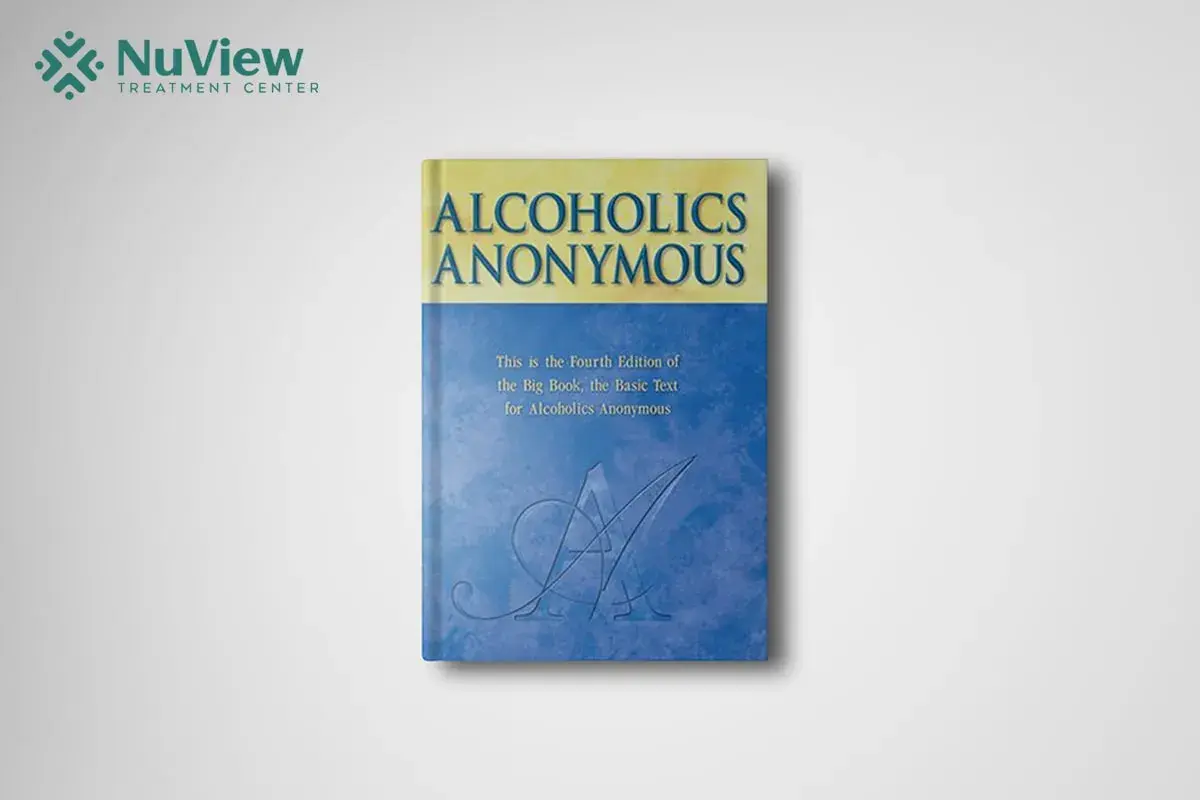
Dr. Ryan Peterson, a highly experienced physician at the NuView Treatment Center, says, “AA was founded in 1935 by Bill W. and Dr. Bob S. in Ohio. Both believed in the power of fellowship and community when it came to recovery and sobriety. Yet, it was in 1939 that AA truly expanded with the publication of the book, ‘Alcoholics Anonymous.’ This book came to be known as the ‘Big Book.’ This book elucidates the 12 Steps of recovery from alcohol use.”
The 12 Steps are as follows:
- We admitted we were powerless over alcohol - that our lives had become unmanageable.
- We came to believe that a Power greater than ourselves could restore us to sanity.
- We made a decision to turn our will and our lives over to the care of God as we understood Him.
- We made a searching and fearless moral inventory of ourselves.
- We admitted to God, to ourselves, and to another human being, the exact nature of our wrongs.
- We were entirely ready to have God remove all these defects of character.
- We humbly asked Him to remove our shortcomings.
- We made a list of all persons we had harmed, and became willing to make amends to them all.
- We made direct amends to such people wherever possible, except when to do so would injure them or others.
- We continued to take personal inventory and, when we were wrong, promptly admitted it.
- We sought through prayer and meditation to improve our conscious contact with God as we understood Him, praying only for knowledge of His will for us and the power to carry that out.
- Having had a spiritual awakening as a result of these steps, we tried to carry this message to alcoholics and to practice these principles in all our affairs.
In a nutshell, AA is based on acknowledging powerlessness over alcohol, connecting and submitting to a Higher Power, taking responsibility for your actions, and making amends to move toward healing and personal growth.
Get Started With Nuview Treatment Center
Our dedicated professional staff is here to guide you or your loved one on the journey to lasting recovery, offering support every step of the way.

Who Can Join the A.A.?
Anybody who wants to learn about or quit alcohol can join the AA.
AA’s membership is free and open to everyone. Presently, AA has a strong presence in 180 countries and hosts over 123,000 meetings worldwide.
AA claims a strong membership of 2 million worldwide. Its membership is diverse with men, women, young, old, single, married, divorced, employed, unemployed, and so on and so forth.
AA members can attend meetings whether they are still drinking or newly sober. There is only one goal, which is a desire for sobriety and a willingness to take action. In fact, a 2020 Cochrane Review suggested that AA can be more effective than cognitive behavioral therapy for alcohol use disorder.
What Are the Different Types of A.A. Meetings?
AA meetings are basically of two types - open meetings and closed meetings. Open meetings are open for everyone - whether they want to quit alcohol or not and even for family members, but closed meetings are only for those who want to quit alcohol.
There are 4 major types of AA meeting formats:
- Beginner Meetings: This type of meeting is designed for those who are new to AA. This meeting is led by those who have been able to maintain sobriety. Beginner AA meeting can be a discussion and can also take a detailed look into the first three steps of the 12-Step program.
- Discussion Meetings: This type of meeting is led by a chair or a leader. During this meeting, the chair or leader will discuss the 12 Steps, 12 Traditions, daily reflections, and other AA topics.
- Speaker Meetings: This type of meeting involves one or two pre-selected speakers who share their stories. Typically, the speaker is someone who has been able to achieve sobriety with AA. However, it can be open to others as well.
- Step, Tradition, or Big Book: This type of meeting involves reading from the Big Book and other A.A.-related resources.
AA meetings are often conducted in rehab centers, church buildings, office premises, and community centers. However, since the COVID-19 pandemic, AA meetings are conducted online as well, which you can join via a Zoom link.
AA meetings have also grown to become more inclusive and specialized in that they can be specifically meant for women, the LGBTQIA+ community, and other specific groups.
What A.A. Is Not?
AA is a fellowship that functions on 12 Steps and 12 Traditions toward recovery, but it is not the following:
- AA does not provide any medical or psychiatric diagnoses or prognosis. Neither does it offer any medical or psychiatric advice.
- It does not provide hospitalization, nursing, drugs, housing, job, financial, or other welfare services.
- It does not take any money or contribution from other entities for its services.
- It does not provide any letters of reference to parole boards, lawyers, social agencies, employers, employees, and others.
- It does not engage or support education, research, or professional treatment.
Dr. Peterson says, “AA is highly effective for your recovery - some studies even suggest that it is as effective as cognitive behavioral therapy, and inexpensive, too. However, AA does not replace clinical care you may need for your physical symptoms and other underlying patterns. This is why AA is best integrated with rehab and aftercare.”
Get Started With Nuview Treatment Center
What If A.A. Is Not for You?
If AA does not resonate with you, then it is okay. Yet, a sense of belonging and community strengthens your recovery from alcohol and other kinds of substance use. This is why, there are other peer support programs you can attend, such as:
How to Find an A.A. Group Near Me?
Wherever you are, there is likely to be an AA meeting near you. If you are in California, you can use this tracker to find the AA meetings near you - open and closed, in-person and online. If you are outside of California, you can use this tracker to find the AA meetings near you.
It may not be that you have to find the right meeting for you right away, you might have to switch back and forth until you find the right one for you. You will know it right away - when you feel seen, heard, and comfortable.
Please do not hesitate to call us at (323) 307-7997 to learn more about AA today!
Frequently Asked Questions About Alcoholics Anonymous
How effective is A.A. in achieving sobriety?
AA can be very effective in your sobriety journey. Some clinical reviews suggest that participation in Alcoholics Anonymous and other 12-Step Facilitation programs can improve abstinence outcomes, particularly when combined with rehab or other recovery programs.
Is A.A. effective on its own?
A.A. can be effective on its own; however, it is not a replacement for clinical care to deal with physical and mental health symptoms. It can be integrated with rehab, too.
What kind of A.A. meeting is right for me?
If you are just beginning, an open meeting may be right for you. If you are committed to quitting alcohol, then a closed meeting can be right for you.
What are the criticisms of A.A.?
The main criticisms levied against AA are questions regarding its scientific grounding/reasoning and the need for its members to adhere to certain beliefs, like a belief in the Higher Power.
Are the alternatives to A.A. effective?
Yes. Studies suggest that peer-support programs such as SMART Recovery and other mutual-help groups can be beneficial for some, particularly when aligned with their personal beliefs and recovery goals.
- How Does A.A. Work?
- Who Can Join the A.A.?
- What Are the Different Types of A.A. Meetings?
- What A.A. Is Not?
- What If A.A. Is Not for You?
- How to Find an A.A. Group Near Me?
- Frequently Asked Questions About Alcoholics Anonymous
- How Does A.A. Work?
- Who Can Join the A.A.?
- What Are the Different Types of A.A. Meetings?
- What A.A. Is Not?
- What If A.A. Is Not for You?
- How to Find an A.A. Group Near Me?
- Frequently Asked Questions About Alcoholics Anonymous
Get Help Today!


- https://www.aa.org/what-is-aa
- https://www.aa.org/aa-around-the-world
- https://www.saturdayeveningpost.com/2015/12/aa/
- https://www.cochranelibrary.com/cdsr/doi/10.1002/14651858.CD012880.pub2/full
- https://smartrecovery.org/
- https://lifering.org/
- https://www.refugerecovery.org/
- https://womenforsobriety.org/
- https://moderation.org/
- https://www.aa.org/find-aa


Everyone is Welcome Here and We All Have Your Back
Your healing journey deserves a personalized approach. At NuView, we integrate expertise in behavioral therapy, mental health, and substance use treatment to create a customized recovery plan tailored to your unique needs.
Connect with our Admissions Specialists today.
Written By
Dr. Ryan Peterson, MD