Medication-Assisted Treatment: The Pros and Cons of MAT.
Disclaimer: This article is for educational purposes only and does not replace expert medical or mental health advice. Medication-assisted treatment for substance use disorders first requires a comprehensive psychiatric and physical evaluation by a qualified clinician. So, always refer to a licensed mental health specialist for diagnosis and treatment.
In recent years, substance use and mental health treatment have grown by leaps and bounds, which has led to better recovery options for persons and communities. One among these treatment options is known as medication-assisted treatment, or MAT, mainly used to treat alcohol and opioid use disorders.
What Is Medication-Assisted Treatment?
Medication-assisted treatment (MAT) combines medication with behavioral therapies in the treatment of substance use disorders, like alcohol and opioid use disorders.
Medication reduces cravings and withdrawal symptoms, and therapy gets to the bottom of substance use and seeks to change the underlying patterns of substance use and co-occurring mental health conditions. It also identifies triggers and develops productive coping strategies.
Peer-reviewed articles in the National Library of Medicine (NLM) indicate that MAT is a robust treatment in enhancing the recovery outcomes for alcohol and opioid use disorders. However, right now, there are no U.S. Food and Drug Administration (FDA)-approved medications for other kinds of commonly misused substances, like marijuana or cocaine.
Get Started With Nuview Treatment Center
Our dedicated professional staff is here to guide you or your loved one on the journey to lasting recovery, offering support every step of the way.

What Type of Medications Are Used in MAT Programs?
The FDA has approved three medications for treating opioid use disorder, which are:
Methadone
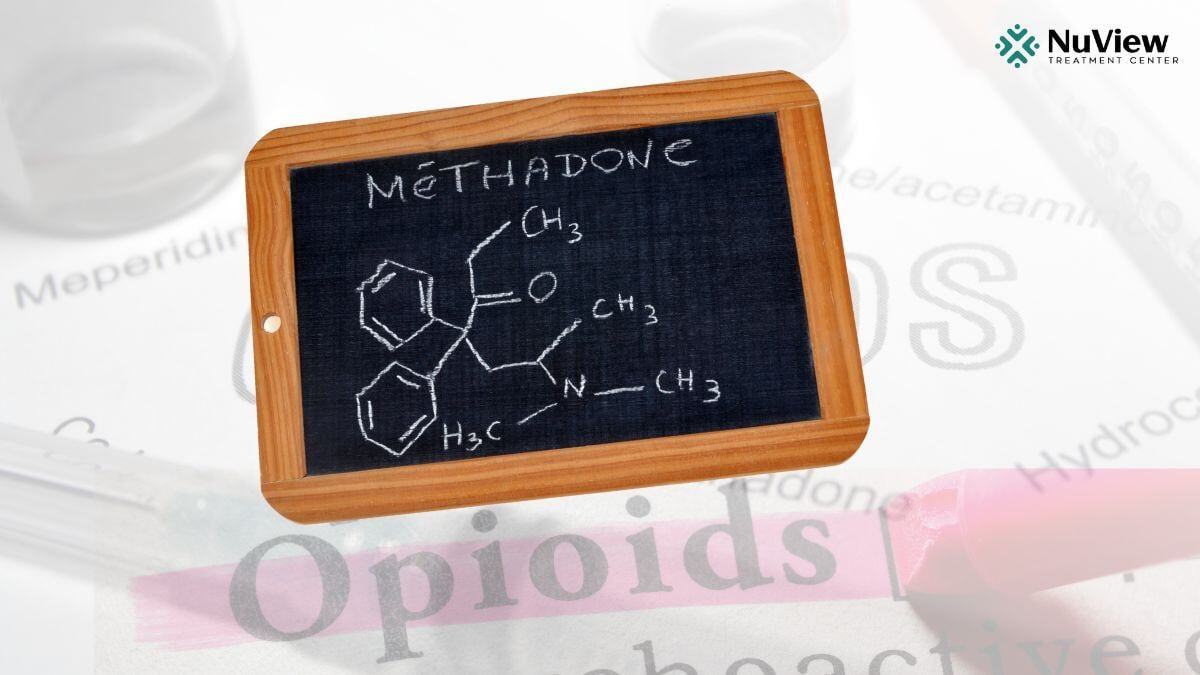
The National Institute on Drug Abuse (NIDA) mentions that methadone is an opioid agonist. While it binds with the same brain receptors as other opioids, it does not lead to the same highs as other opioids do. Even more so, methadone reduces opioid cravings by reducing their pleasant effects, thereby removing the desire to misuse opioids and other similar substances.
Buprenorphine
NIDA says buprenorphine is a partial opioid agonist. It binds to the opioid receptors in the brain without producing the same highs as other opioids. It reduces cravings and withdrawal symptoms and is typically used in cases of mild to moderate opioid use disorder.
Naltrexone
NIDA notes that naltrexone is an opioid antagonist, which means that it blocks the activation of opioid receptors. In doing so, it prevents opioids from producing a “high” and reduces cravings for the same. Moreover, naltrexone can be given as a long-acting injectable, so its effects last for a few weeks.
The FDA has also approved three medications for alcohol use disorder, which are:
Acamprosate
Acamprosate is mainly prescribed for those who are not currently on alcohol. It is typically effective in maintaining sobriety after detoxification.
Disulfiram
Disulfiram is used to prevent further alcohol use after a person has stopped drinking. Disulfiram targets and blocks a liver enzyme involved in breaking down alcohol byproducts. So, even if a person drinks small amounts of alcohol, it can lead to unpleasant and, sometimes, even severe symptoms. Therefore, it must only be taken under the strict supervision of your doctor/psychiatrist.
Naltrexone
Naltrexone is an opioid antagonist that also reduces alcohol consumption. As alcohol stimulates endogenous opioid release and increases dopamine, naltrexone blocks the high and future cravings. It is typically most effective among those who are already abstinent.
Please note that each of these medications is a prescription medication and must only be taken as per the prescription and under strict supervision by board-certified physicians and psychiatric practitioners.
What are the Pros and Cons of Medication-Assisted Treatment?
Institutions like the Substance Abuse and Mental Health Services Administration (SAMHSA) identify MAT as part of whole person care that seeks to heal your mind, body, and spirit. This also involves traditional and holistic psychotherapy.
However, substance use and mental health treatment thrive on informed decision-making. This is why here is a list of pros and cons you can keep in mind when it comes to MAT. The benefits are:
- Decreases substance use by targeting specific receptors in the brain to reduce cravings and manage withdrawal symptoms.
- By providing the twofold benefits of medication and therapy, it reduces the risks of overdose and relapse.
- Uses safe, FDA-approved medications for treatment. Furthermore, medication management goes beyond just prescribing medications. It prescribes, monitors, and adapts medication for a more personalized treatment.
- Specific studies and observations have shown that MAT has a success rate of 60% for severe conditions, like opioid use. This means it significantly reduces overdose-related deaths as well.
MAT, while being effective, does have certain cons or potential drawbacks you need to be aware of:
- It involves strict supervision, which may not be comfortable for everyone.
- Medications do come with their side effects.
- Certain medications used have a certain potential for misuse.
While MAT does have certain drawbacks, these drawbacks can be controlled by strictly adhering to your doctor's prescriptions and instructions and slowly tapering off the medications under medically supervised conditions. In doing so, they reduce the potential for misuse and lay the foundation for a lasting recovery.
Get Started With Nuview Treatment Center
Is Medication-Assisted Treatment Right For You?
While MAT has its pros and cons, to receive expert medical and mental health advice on whether it can be right for you - please reach out to the NuView Treatment Center today.
Our expert team of licensed and experienced physicians and psychiatric practitioners will conduct a comprehensive psychiatric evaluation and understand your symptoms and medical history to offer personalized care options for you.
Please do not hesitate to reach out to us at to connect with our expert team today!
Frequently Asked Questions About Medication-Assisted Treatment
How long does someone typically stay on Medication-Assisted Treatment (MAT)?
The length of MAT varies by individual, but typically, the time is at least 12 months.
Can I maintain daily responsibilities while on MAT?
Yes, when properly managed, MAT allows you to maintain daily responsibilities, like education, job, and family as well.
Is MAT simply replacing one addiction with another?
No, this is a myth. FDA-approved MAT medications are medically supervised recovery options that stabilize brain chemistry without producing the highs that come with substance misuse.
Can MAT be used if someone has co-occurring mental health conditions?
Yes, MAT is often integrated with mental health care to address both substance use disorders and co-occurring mental health conditions.
What happens if someone relapses while on MAT?
Relapse is a part of the recovery journey, not a failure. MAT plans are typically adjusted and modified to better facilitate recovery.
- What Is Medication-Assisted Treatment?
- What Type of Medications Are Used in MAT Programs?
- What are the Pros and Cons of Medication-Assisted Treatment?
- Is Medication-Assisted Treatment Right For You?
- Frequently Asked Questions About Medication-Assisted Treatment
- What Is Medication-Assisted Treatment?
- What Type of Medications Are Used in MAT Programs?
- What are the Pros and Cons of Medication-Assisted Treatment?
- Is Medication-Assisted Treatment Right For You?
- Frequently Asked Questions About Medication-Assisted Treatment
Get Help Today!
- https://www.ncbi.nlm.nih.gov/books/NBK424859/
- https://www.fda.gov/drugs/information-drug-class/information-about-medications-opioid-use-disorder-moud
- https://nida.nih.gov/research-topics/medications-opioid-use-disorder
- https://www.aafp.org/pubs/afp/issues/2016/0315/p457.html
- https://www.samhsa.gov/substance-use/treatment/options
- https://content.leg.colorado.gov/sites/default/files/images/mat_slide_deck_for_interim_study_comiittee_july_20_2018_final_.pdf


Everyone is Welcome Here and We All Have Your Back
Your healing journey deserves a personalized approach. At NuView, we integrate expertise in behavioral therapy, mental health, and substance use treatment to create a customized recovery plan tailored to your unique needs.
Connect with our Admissions Specialists today.
Written By
Dr. Ryan Peterson, MD