Lithium For Bipolar Disorder
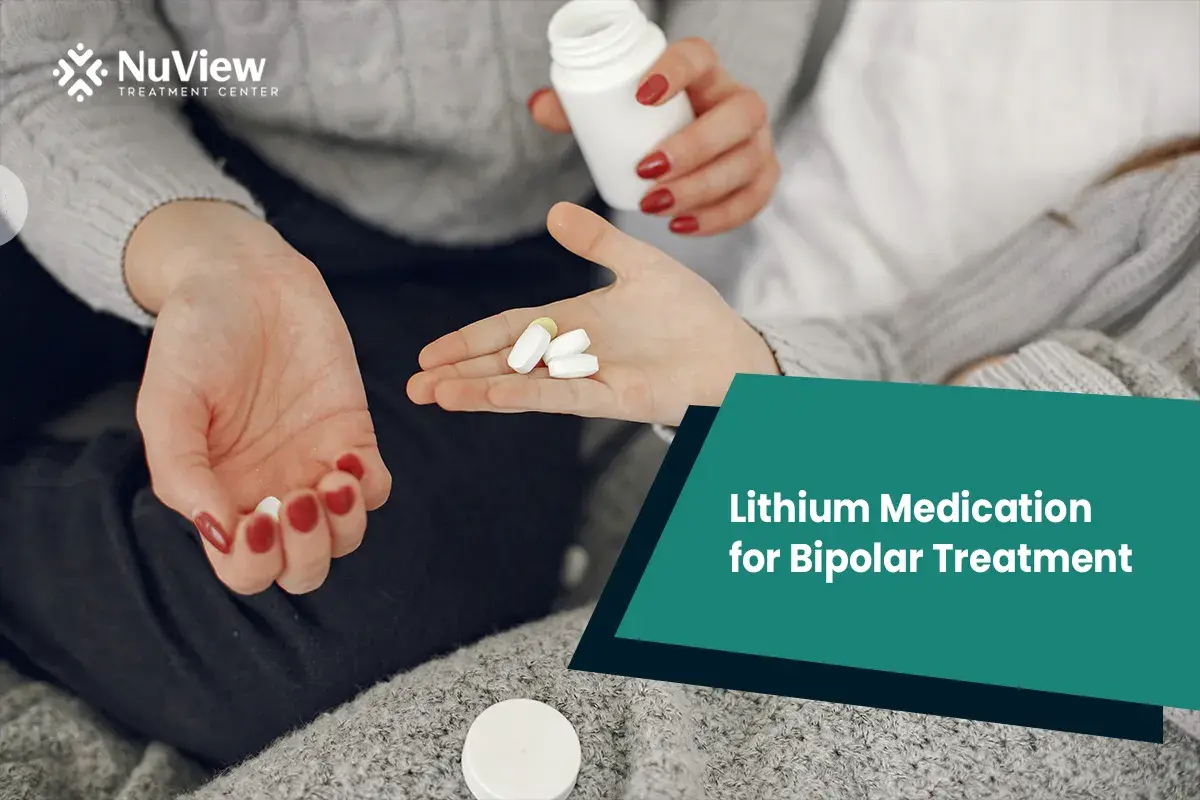
Disclaimer: This article is for educational purposes only and does not replace expert medical or mental health advice. Bipolar disorder diagnosis and treatment require a comprehensive psychiatric and physical evaluation by a qualified clinician. So, always refer to a licensed mental health specialist for diagnosis and treatment.
Bipolar disorder is characterized by extreme mood shifts - between highs (mania/hypomania) and lows (depressive episodes). As per the National Institute of Mental Health (NIMH), it has estimated that this condition impacts 2.8% in the U.S. Bipolar disorder is a chronic mental health condition, which means it needs lifelong management. However, one population-based study published in reputable journals reported that nearly 44% of those diagnosed with this condition achieve recovery. One of the widely used treatment options for bipolar disorder is lithium.
What Is Lithium?
Lithium is a mood stabilizer that is considered to be the U.S. Food and Drug Administration (FDA)-approved first line of treatment for bipolar disorder. It has off-label uses for treating major depressive disorder as well.
Lithium is typically used to treat the manic episodes of bipolar disorder. When used consistently, it reduces the frequency of manic episodes.
Please note that lithium is only to be prescribed and used under the close supervision of a board-certified physician or psychiatric practitioner.
How Does Lithium Work For Bipolar Disorder?
Lithium’s exact mechanism of action is not fully understood. However, as per peer-reviewed articles published in the National Library of Medicine (NLM), it impacts how sodium moves in and out of nerve cells, thereby stabilizing mood.
Lithium also impacts brain chemicals like catecholamines and serotonin, which play key roles in regulating mood, emotion, and behavior.
Lithium blocks an enzyme called inositol monophosphate, which changes how certain signals are transmitted in the brain. It also reduces the activity of protein kinase C, leading to changes in gene expression related to neurotransmission. This may increase protective proteins in the brain, promote the growth of new neurons, and potentially increase gray matter volume.
Get Started With Nuview Treatment Center
Our dedicated professional staff is here to guide you or your loved one on the journey to lasting recovery, offering support every step of the way.

What Is the Prescribed Dose of Lithium for Bipolar Disorder?
Lithium is available as a pill, capsule, and liquid. For adults, the general prescribed dose is as follows:
- Regular-release formulations: 600 mg orally 2 to 3 times a day.
- Extended-release formulations: 900 mg orally 2 times a day.
Regular-release formulations are taken once in the morning, afternoon, and at night. Whereas, extended-release formulations are taken once in the morning and once at night.
Please keep in mind that while these are the typical dosages, medication dosing and monitoring are only done under close psychiatric supervision. In case of missed dose or other adjustments, contact your doctor immediately.
What Are the Benefits of Lithium?
Lithium is prescribed for mania, hypomania, and mood shifts. It is also used to treat some kinds of depressive symptoms and schizophrenia.
If the medication is effective for your symptoms, your doctor will prescribe it for the long-term. As bipolar disorder is a lifelong condition, you must adhere to the medication plan as prescribed by your doctor.
How Effective Is Lithium for Bipolar Disorder?
Lithium is effective in treating bipolar disorder. Peer-reviewed studies published in reputable journals like the American Journal of Psychiatry say that bipolar disorder has a protective effect on manic/hypomanic episodes, and reduces the risk of relapse by up to 40%. The protective effect on depressive disorder was considerably smaller.
Get Started With Nuview Treatment Center
What Are the Side Effects of Lithium?
Lithium has both short-term and long-term side effects.
Some commonly recognizable short-term side effects are:
- Nausea
- Diarrhea
- Dry mouth
- Fatigue
- Mild tremors.
Some of the serious, longer-lasting side effects are:
- Fatigue
- Weight gain
- Hair loss
- Thyroid and kidney problems
- Brain fog.
If you experience any of these side effects, reach out to your doctor immediately. They will adjust the dosage or change the medication.
Lithium can impact kidney and thyroid function; this is why regular monitoring is crucial. Most clients require blood tests every 3 - 6 months once stabilized. Monitoring typically involves serum lithium levels, thyroid and kidney function tests.
Lithium Toxicity
If you experience nausea, lightheadedness, extreme thirst, confusion, blackouts, shakiness, and tremors - please reach out for medical attention immediately. These are signs of lithium toxicity, which is a medical emergency.
What Are the Precautions You Need to Take With Lithium?
If you have been prescribed lithium, you need to have a conversation with your doctor regarding alcohol or drug use, as well as the use of other prescription medications or supplements. The Mayo Clinic informs that lithium interacts with a number of substances, so be open and honest with your doctor.
Please be open regarding pre-existing health conditions (like heart, kidney, and thyroid conditions), allergies, or planning pregnancy, or if you are pregnant or breastfeeding as well.
Here are some other safety measures you need to adhere to:
- Take the medication only as prescribed by your doctor.
- There are different forms of lithium, and each has its own dosing and usage methods. Follow them as prescribed by your doctor.
- If you missed a dose or want to make any adjustments, contact your doctor. Do not make any medication-related decisions on your own.
- Store the medication carefully, and keep it out of the reach of children.
- Dispose of unused medications safely.
Treating Bipolar Disorder at the NuView Treatment Center
If you or a loved one is struggling with bipolar disorder or related symptoms, reach out to the NuView Treatment Center today. Our licensed and experienced clinicians offer a full continuum of integrated outpatient care, ranging from partial hospitalization programs to step-down intensive outpatient programs and telehealth services for your healing.
Please do not hesitate to call us at (323) 307-7997 to connect with our experts today.
Frequently Asked Questions About Lithium for Bipolar Disorder
Is lithium effective for bipolar disorder?
Lithium is highly effective in treating and reducing manic/hypomanic episodes, but it can be underutilized given its side effects.
How does lithium treat and reduce manic/hypomanic episodes?
Lithium impacts neurotransmitter levels in the brain to act as a mood stabilizer and control manic/hypomanic episodes. It also controls depressive episodes, but to a lesser extent.
How long does it take for lithium to show effect?
It might take a few weeks for lithium to show an effect. This is why you need to adhere to the medication plan as prescribed by your doctor.
Does lithium impact pregnancy and childbirth?
Lithium is generally not recommended during pregnancy, given its potential risks to the developing fetus. This is why you need to have an open conversation with your doctor if you are planning a pregnancy or are pregnant.
What are the other types of medications prescribed for bipolar disorder?
Apart from lithium, other mood stabilizers like carbamazepine, divalproex sodium, lamotrigine, and valproic acid can also be prescribed. Anxiolytics, antipsychotics, and antidepressants can also be prescribed.
Bipolar disorder may require a combination of treatment methods for effective management, so medication selection and planning are always done in close consultation with board-certified physicians and psychiatric practitioners.
- What Is Lithium?
- How Does Lithium Work For Bipolar Disorder?
- What Is the Prescribed Dose of Lithium for Bipolar Disorder?
- What Are the Benefits of Lithium?
- How Effective Is Lithium for Bipolar Disorder?
- What Are the Side Effects of Lithium?
- What Are the Precautions You Need to Take With Lithium?
- Treating Bipolar Disorder at the NuView Treatment Center
- Frequently Asked Questions About Lithium for Bipolar Disorder
- What Is Lithium?
- How Does Lithium Work For Bipolar Disorder?
- What Is the Prescribed Dose of Lithium for Bipolar Disorder?
- What Are the Benefits of Lithium?
- How Effective Is Lithium for Bipolar Disorder?
- What Are the Side Effects of Lithium?
- What Are the Precautions You Need to Take With Lithium?
- Treating Bipolar Disorder at the NuView Treatment Center
- Frequently Asked Questions About Lithium for Bipolar Disorder
Get Help Today!


- https://www.nimh.nih.gov/health/statistics/bipolar-disorder
- https://www.sciencedirect.com/science/article/pii/S2666915324000945
- https://www.drugs.com/dosage/lithium.html
- https://www.nhs.uk/medicines/lithium/side-effects-of-lithium/
- https://www.mayoclinic.org/drugs-supplements/lithium-oral-route/description/drg-20064603


Everyone is Welcome Here and We All Have Your Back
Your healing journey deserves a personalized approach. At NuView, we integrate expertise in behavioral therapy, mental health, and substance use treatment to create a customized recovery plan tailored to your unique needs.
Connect with our Admissions Specialists today.
Written By
Dr. Ryan Peterson, MD