How Is Kratom Addiction Treated?
Disclaimer: This article is for educational purposes only and does not replace expert medical or mental health advice. Kratom addiction and dependence require a comprehensive psychiatric and physical evaluation by a qualified clinician. So, always refer to a licensed mental health specialist for diagnosis and treatment.
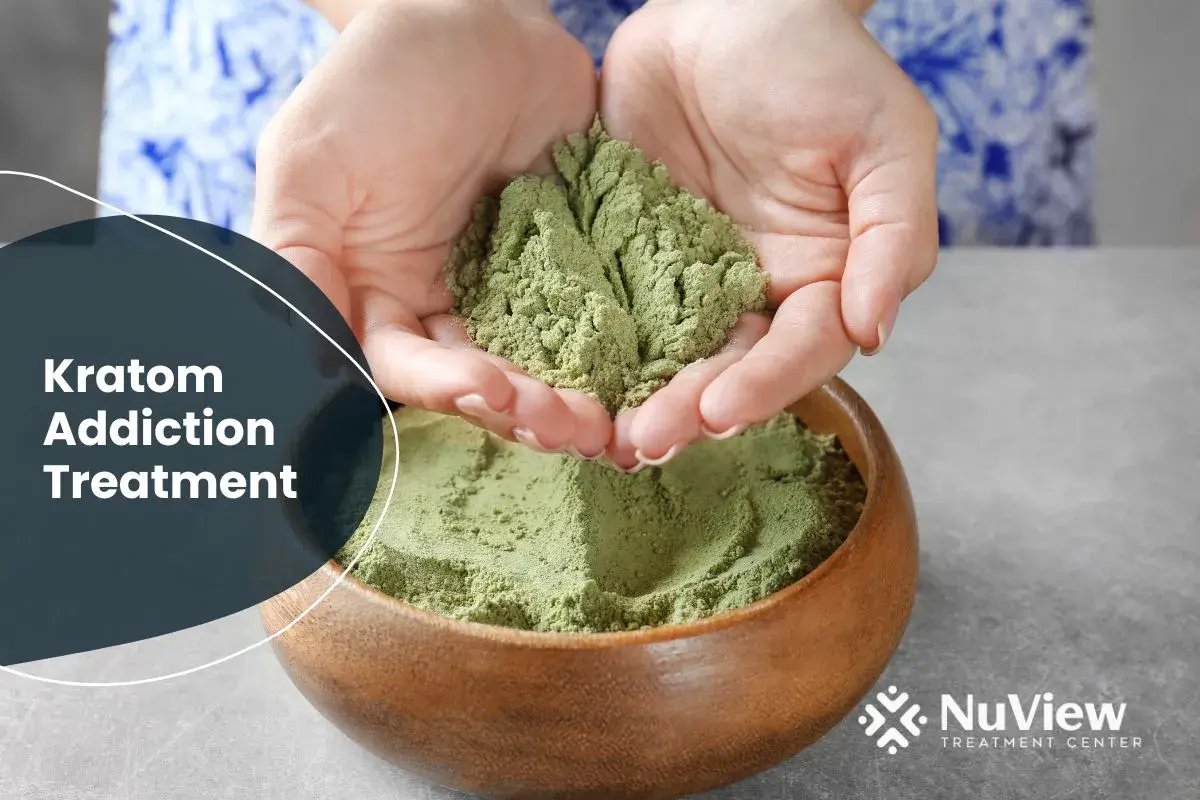
Kratom is an extract that comes from a tropical tree called Mitragyna speciosa, which is native to Southeast Asia. Those who use kratom typically dry and powder its leaves, and even brew it into a tea. It is also available as a tablet and capsule. At lower doses, it acts as an upper, and at higher doses, it acts as a downer. This is why kratom can lead to misuse and dependence. So, how is kratom addiction treated? Kratom addiction is treated with evidence-based behavioral therapies for a lasting recovery and fulfilling life.
What Is Kratom?
Kratom comes from a tree native to Southeast Asia. It is also known as biak, kakaum, ketum, thang, and thom.
Kratom leaves contain two major psychoactive ingredients, which are known as mitragynine and 7-hydroxymitragynine. The U.S. Drug Enforcement Administration (DEA) says that at lower doses, kratom acts as a stimulant, leading to a sense of euphoria or a high. At higher doses, it acts as a sedative, giving rise to relaxing effects.
Many use kratom for pain relief and to treat opioid withdrawal symptoms. However, this is just anecdotal evidence. The U.S. Food and Drug Administration (FDA) has not approved kratom for any medical use and warns against its dangerous, intoxicating effects.
Get Started With Nuview Treatment Center
Our dedicated professional staff is here to guide you or your loved one on the journey to lasting recovery, offering support every step of the way.

What Are the Side Effects of Kratom Use?
Kratom use may initially seem pleasing, but it gives rise to short-term and more serious side effects, such as:
- Nausea
- Vomiting
- Constipation
- Increased urination
- Itching
- Sweating
- Drowsiness
- Loss of appetite
- Weight loss
- Anorexia
- Psychosis
- Sleeplessness
- Heart arrhythmias
- Seizure.
If you or someone you know is experiencing these effects, seek medical care immediately. You can reach out to your doctor and even call emergency providers like 9-1-1 in the U.S., or your local emergency services if you are outside of the U.S.
Why Is Kratom Addictive?
Kratom can become addictive mainly because of its major psychoactive compounds - mitragynine and 7-hydroxymitragynine. Peer-reviewed studies published in the National Library of Medicine (NLM) say that they bind to the opioid receptors in the brain like other addictive opioids, and give rise to similar pain-relieving and euphoric effects.
While some kratom users say that kratom reduces opioid cravings and withdrawal, this has not been scientifically substantiated until now. Nevertheless, some use kratom to treat pain and opioid withdrawal, while others use it recreationally because of its stimulant and sedative effects.
What Are the Signs of Kratom Addiction?
As per the Diagnostic and Statistical Manual of Mental Disorders (DSM-5-TR), the signs and symptoms of kratom addiction are:
- Strong, persistent cravings to use kratom.
- Using kratom more frequently and heavily.
- Have tried to quit kratom once or twice before, but have been unsuccessful.
- Prioritizing kratom use over other responsibilities, like education, job, and family.
- Giving a lot of time to acquire, use, and recover from kratom use.
- Continuing to use kratom in spite of its impact on physical, psychological, and social health.
- Developing tolerance for kratom - which means that you need to use it in larger quantities to experience the desired effects.
- Experiencing withdrawal symptoms upon abruptly reducing or quitting kratom, which typically begin 48 hours after the last dose.
Kratom withdrawal symptoms can be physical and psychological:
- Restlessness
- Agitation
- Sadness
- Fever
- Spasms and pain
- Watery eyes and a runny nose
- Diarrhea
- Insomnia.
If you or someone you know is experiencing these symptoms, then it may be an indication that you can benefit from kratom addiction treatment.
Get Started With Nuview Treatment Center
How Is Kratom Addiction Treated?
Kratom addiction is primarily treated with evidence-based behavioral therapies. The National Institute on Drug Abuse (NIDA) says that there are presently no FDA-approved medications to treat kratom addiction or dependence.
Behavioral therapies used to treat kratom addiction are:
- Motivational Interviewing (MI): MI uses interviewing techniques to overcome ambivalence and instill internal motivation to recover from kratom misuse and dependence.
- Cognitive Behavioral Therapy (CBT): CBT identifies and changes underlying thinking patterns leading to kratom misuse and equips you with coping skills to deal with life’s challenges.
- Contingency Management: It is a behavioral technique that uses reinforcements to strengthen desirable behaviors like staying off kratom, attending therapy, and so on.
- 12-Step Facilitation Therapy: It uses the 12 Steps of Alcoholics Anonymous (AA) to instill a sense of personal responsibility and community toward overcoming kratom misuse.
Apart from these therapies, group therapy and family therapy can also be used to provide a conducive environment for recovery. Holistic healing practices like creative expression, exercise, mindfulness, and others are also used to complement traditional therapies.
In some cases, there have been reports of medications being used to treat kratom withdrawal and other related symptoms. However, this is not common. Besides, medication selection and planning must only be done under the close supervision of board-certified physicians or psychiatric practitioners.
If You Are Struggling With Kratom Use, Reach Out to NuView Today!
If you or a loved one is struggling with kratom addiction or dependence, reach out to the NuView Treatment Center today! Our licensed and experienced clinical team provides a full continuum of personalized outpatient care that enables you to navigate daily life and recovery by meeting you where you are.
Please do not hesitate to reach out to us at (323) 307-7997 to connect with our expert team now!
Frequently Asked Questions About Kratom Addiction Treatment
Is kratom addictive?
Kratom has an addictive potential, owing to its two major psychoactive ingredients - mitragynine and 7-hydroxymitragynine. Peer-reviewed studies published in reputed journals have shown that nearly 12.3% of those who use kratom meet the DSM-5-TR criteria for substance use disorder.
How much kratom is considered to be safe?
Generally speaking, there is no safe amount of kratom that can be consumed.
Can kratom addiction be cured?
Kratom addiction can be effectively treated with evidence-based behavioral therapies. Presently, there are no FDA-approved medications to treat or cure kratom addiction.
Is kratom use legal?
Kratom is not a controlled substance as per the Controlled Substances Act. However, some states in the U.S. can still impose regulations and prohibitions on kratom use, as the FDA warns against its dangerous effects.
Can kratom be used for medical purposes?
The FDA does not approve kratom for any medical use.
- What Is Kratom?
- What Are the Side Effects of Kratom Use?
- Why Is Kratom Addictive?
- What Are the Signs of Kratom Addiction?
- How Is Kratom Addiction Treated?
- If You Are Struggling With Kratom Use, Reach Out to NuView Today!
- Frequently Asked Questions About Kratom Addiction Treatment
- What Is Kratom?
- What Are the Side Effects of Kratom Use?
- Why Is Kratom Addictive?
- What Are the Signs of Kratom Addiction?
- How Is Kratom Addiction Treated?
- If You Are Struggling With Kratom Use, Reach Out to NuView Today!
- Frequently Asked Questions About Kratom Addiction Treatment
Get Help Today!

- https://www.sciencedirect.com/science/article/pii/S2666154325008968
- https://www.dea.gov/sites/default/files/2020-06/Kratom-2020_0.pdf
- https://www.fda.gov/news-events/public-health-focus/fda-and-kratom
- https://pmc.ncbi.nlm.nih.gov/articles/PMC7203303/
- https://www.psychiatry.org/psychiatrists/practice/dsm
- https://www.sciencedirect.com/science/article/abs/pii/S0376871614007935
- https://nida.nih.gov/research-topics/kratom#symptoms-treated
- https://journals.lww.com/journaladdictionmedicine/abstract/2021/04000/treatment_of_kratom_withdrawal_and_dependence_with.15.aspx
- https://link.springer.com/article/10.1007/s11920-024-01524-1


Everyone is Welcome Here and We All Have Your Back
Your healing journey deserves a personalized approach. At NuView, we integrate expertise in behavioral therapy, mental health, and substance use treatment to create a customized recovery plan tailored to your unique needs.
Connect with our Admissions Specialists today.
Written By
Dr. Ryan Peterson, MD